


immersive solutions
via VR, AR, MR & XR
built for business
results
Fully-functional VR, AR, MR, and XR applications with optimized performance, natural interactions, and cross-platform compatibility – deployed for headsets, mobile devices, AR glasses, and web browsers.
deploy immersive
solutions that drive
real results
immersive experiences
& spatial computing
Immersive experiences transform how users interact with digital content and physical spaces. We develop VR applications that transport users to complete virtual worlds, AR solutions that overlay information onto real environments through phones and tablets, MR experiences that anchor holograms to physical spaces via headsets, and unified XR platforms that work across all three from a single codebase.
Our team handles complete development – from concept and 3D environment creation through interaction design, performance optimization, and multi-platform deployment.
Whether you need enterprise training simulations, retail product visualization, healthcare therapy applications, or collaborative workspaces, we build immersive solutions optimized for headsets, mobile devices, AR glasses, and web browsers.
our immersive
development services
virtual reality
(VR)
Virtual worlds that are scalable globally and across industries, driving uptake of your products and services. We develop VR experiences – building 3D environments, hand-tracking systems, controller interactions, and spatial audio for Meta Quest, PlayStation VR, PC VR headsets, SteamVR, and Apple Vision Pro. Working across various industries, including education, architecture, military training, social platforms, and more – we create VR applications that prioritize user comfort, responsive interactions, and smooth technical performance.
extended
reality (XR)
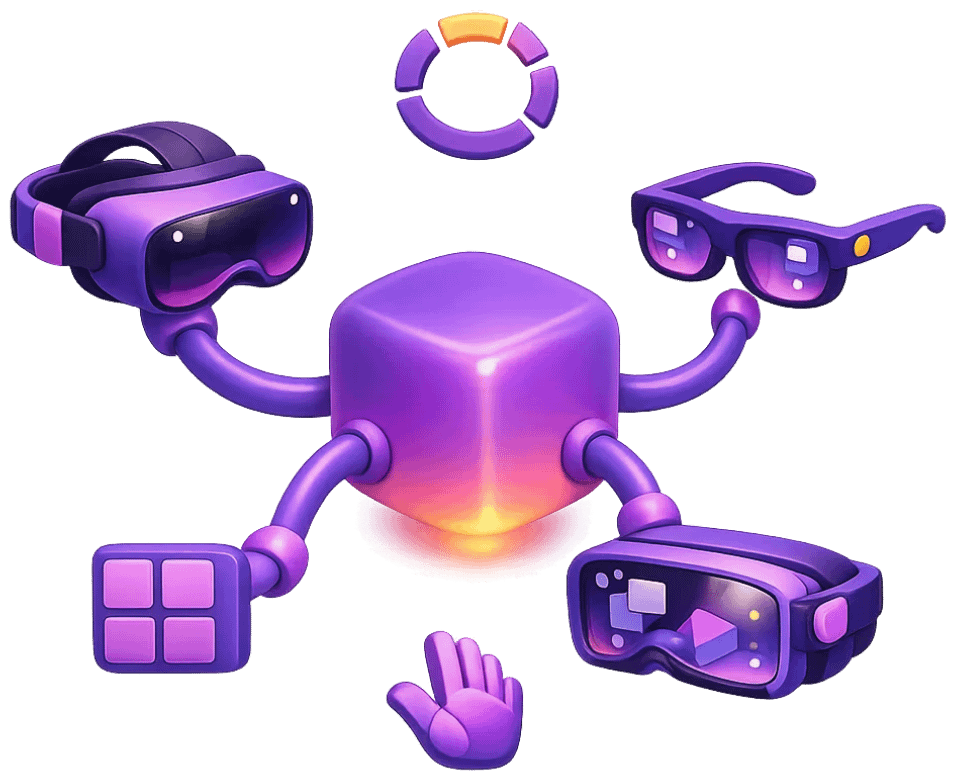
Unified applications that work across VR, AR, and MR devices from a single codebase. We build XR solutions using OpenXR and WebXR standards – implementing platform-agnostic architectures that automatically adapt rendering quality, interaction methods, UI layouts, and performance scaling based on detected hardware capabilities. Our XR approach eliminates the need for building three separate applications by creating adaptive systems that work across current and emerging devices without requiring complete rebuilds. Working across retail product visualization, enterprise collaboration, training programs, healthcare applications, and more – we create XR solutions that reach audiences across all device types while protecting your investment as new XR hardware emerges.
augmented
reality (AR)
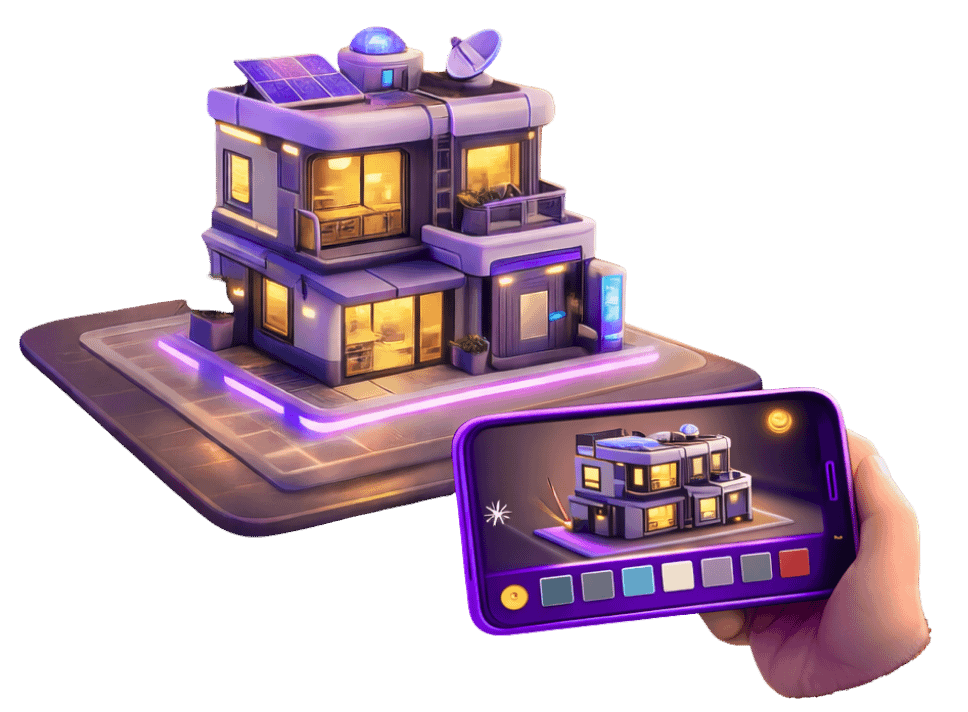
Digital content overlaid onto real-world environments to give you context-aware information to make better and faster decisions. We build AR applications using ARKit, ARCore, and WebAR frameworks – implementing surface detection, image tracking, object recognition, and persistent anchoring that keeps digital content stable in physical spaces. Working across iOS, Android, AR glasses, and web browsers, we create marker-based systems that trigger content from images and markerless experiences that work anywhere.
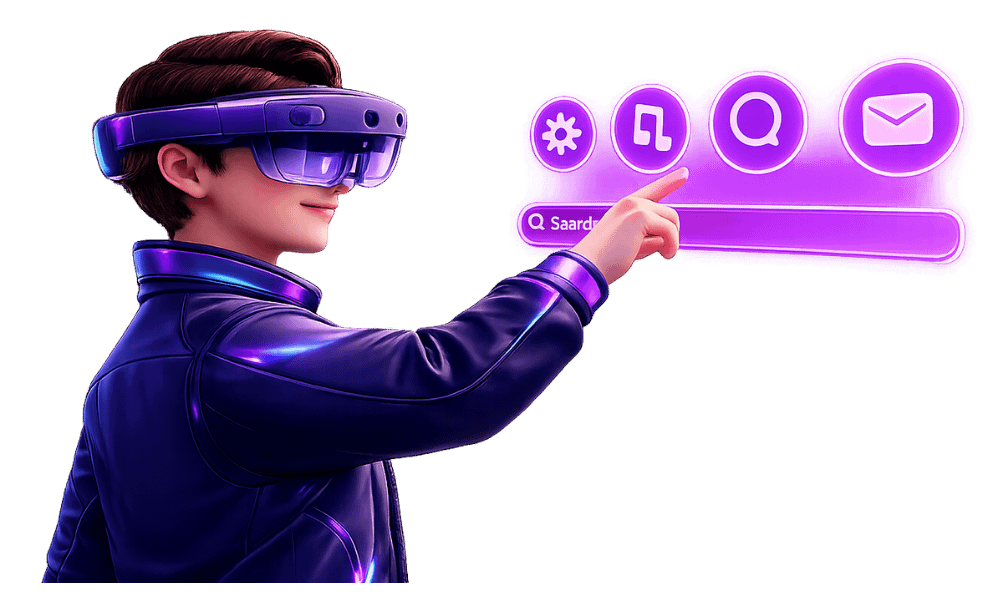
mixed reality
(MR)
Holograms that understand and interact with physical spaces through headsets with depth sensors and spatial mapping. We develop MR applications for Microsoft HoloLens, Magic Leap, Apple Vision Pro, Meta Quest, and HTC Vive – implementing environment scanning, surface detection, and cloud-based spatial anchors that keep digital content accurately positioned across sessions. We build hand-tracking systems for natural gestures, voice command integration for hands-free control, eye-tracking interfaces, and multi-user collaboration where teams see and manipulate the same holograms anchored to shared physical locations.
why choose algoryte for
immersive development?
performance-first
approach
We build experiences maintaining target frame rates through optimized rendering, efficient asset management, and platform-specific tuning – ensuring comfortable, responsive interactions without motion sickness or lag.
cross-platform
expertise
Our team develops across the complete immersive spectrum – VR headsets, AR mobile applications, AR glasses, MR devices, web-based experiences, and unified XR solutions – understanding each platform’s capabilities and constraints.
natural
interaction
design
We create intuitive control systems using hand tracking, controller input, voice commands, eye-tracking, and touch – designing interactions that feel instinctive rather than requiring extensive tutorials or fighting against user expectations.
real-world
testing
We validate experiences across diverse conditions – different lighting scenarios, room sizes, surface types, and user groups – identifying comfort issues, tracking problems, and usability barriers before deployment rather than after launch.
enterprise
integration
Our solutions connect with existing business systems – integrating APIs, databases, analytics platforms, and cloud services – ensuring immersive experiences support actual workflows rather than operating in isolation from operational needs.
future-proof
architecture
We build using open standards (OpenXR, WebXR) and platform abstraction layers – protecting your investment as new devices emerge and ensuring applications adapt to evolving hardware without complete rebuilds.

our immersive
development process
discovery & strategy
We assess your goals, target users, and technical requirements – determining which immersive formats (VR, AR, MR, or unified XR) best serve your use case and recommending appropriate platforms and deployment strategies.
concept & interaction design
Our team creates design documentation defining user flows, interaction methods, comfort features, and visual approaches – prototyping core mechanics early to validate usability before full development begins.
3D environment & asset production
We build optimized 3D content – modeling environments, characters, and objects with appropriate polygon counts, creating textures that respond to lighting, and establishing visual quality that balances fidelity with performance requirements.
application development
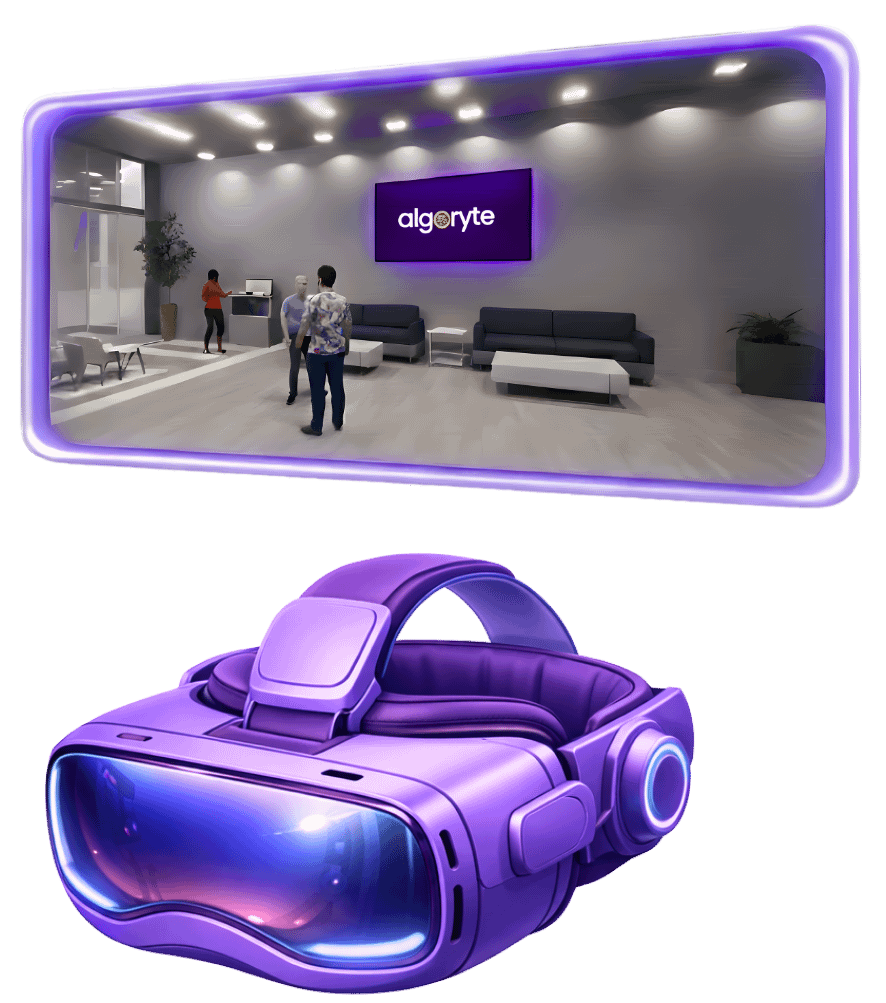
We implement complete experiences – building interaction systems, integrating tracking technologies, developing UI interfaces, adding audio layers, and ensuring smooth performance across target hardware through continuous optimization.
multi-device testing
Our team validates experiences across platforms – testing on actual headsets, phones, and AR glasses in real-world conditions – measuring frame rates, evaluating comfort, and refining interactions based on diverse user feedback.
deployment & support
We handle platform submissions, provide deployment documentation, train your team on device management, and offer ongoing support – implementing updates, fixing issues, and adding compatibility as new hardware releases.
FAQs
VR (Virtual Reality) creates complete virtual environments through headsets that block out the physical world. AR (Augmented Reality) overlays digital content onto real environments via phone cameras or AR glasses. MR (Mixed Reality) uses headsets with depth sensors to anchor holograms that interact with physical spaces. XR (Extended Reality) refers to unified applications that work across VR, AR, and MR from a single codebase.
VR works best for complete immersion and training scenarios where blocking out distractions helps focus. AR suits mobile-first experiences and situations where users need to see their physical environment. MR excels when digital content must interact precisely with real objects and spaces. XR makes sense when you want one solution working across multiple device types. We’ll recommend the right approach based on your specific use case, audience, and budget.
We aim to maintain consistent high frame rates (~90+ FPS for VR), implement comfortable movement systems (teleportation, smooth locomotion with options), keep interfaces stable, avoid sudden camera changes, design predictable interactions, and test with users sensitive to motion sickness – identifying and eliminating triggers before deployment.
Yes, through strategic architecture. Native apps provide the best performance and features for specific platforms. Unified XR solutions share core logic while adapting rendering, interactions, and UI to each device. WebXR delivers browser-based experiences without app downloads. We’ll recommend the approach that balances technical requirements, audience reach, and development budget.
Simple experiences (product visualization, basic training) take 2-4 months. Medium-complexity applications (interactive simulations, multi-user environments) require 4-8 months. Complex platforms (enterprise training systems, multiplayer worlds) need 8-12+ months. Timeline factors include content scope, 3D asset volume, interaction complexity, platform targets, multiplayer requirements, enterprise integrations, and optimization demands for target hardware.